Exchanged crosses
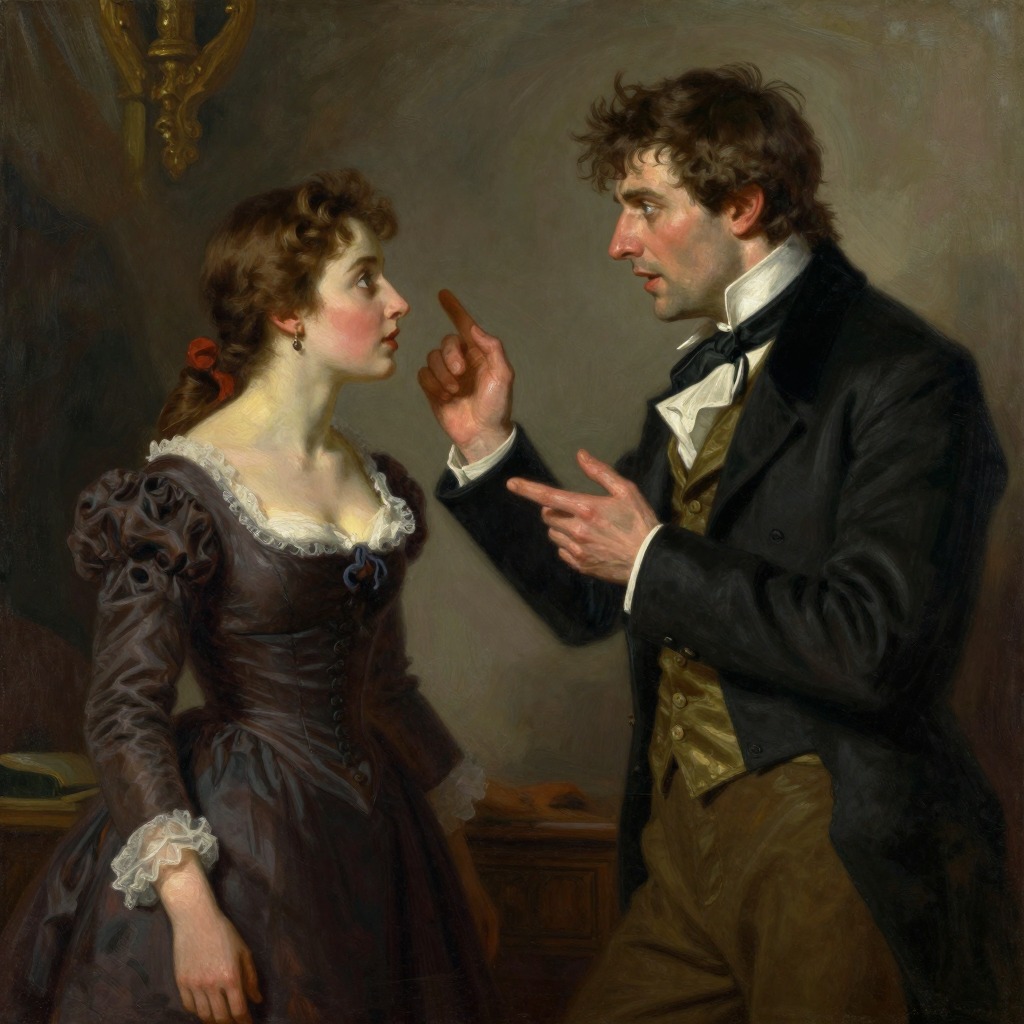
The exchanged crosses between Prince Lef Nicolaievitch Muishkin and Parfen Rogojin are among the most charged symbolic objects in the novel, a ritual of Orthodox brotherhood performed in the shadow of a murderous intent that it cannot dispel. The exchange takes place on the same day Rogojin has twice attempted to kill the prince—first in the dark stairwell of a hotel, where an epileptic fit saved Muishkin's life, and then, moments before the exchange, in Rogojin's own study, where the prince has absently picked up a garden knife and Rogojin has twice snatched it from his hand. The act is Rogojin's idea, a sudden, impulsive proposal that seems to spring from a desperate need to bind himself to the man he both loves and hates.
The Exchange and Its Immediate Context
When the prince, after their tense conversation, prepares to leave, Rogojin calls him back and asks to see the tin cross the prince bought from a drunken soldier that morning. Muishkin had purchased the cross for fourpence, a cheap, large tin cross made after the Byzantine pattern, from a soldier who was clearly pleased to have cheated a foolish gentleman. Rogojin insists on an exchange: he will give the prince his own gold cross in return for the tin one. The prince, though he would rather have kept the particular cross, agrees, saying, "You wish to exchange crosses? Very well, Parfen, if that's the case, I'm glad enough—that makes us brothers, you know." The prince takes off his tin cross, Parfen his gold one, and the exchange is made. The moment is heavy with unspoken meaning: the gold cross, a symbol of wealth and the Rogojin family's merchant status, is traded for a pauper's cross, bought in a moment of street-level encounter with Russian poverty and superstition.
The Failed Brotherhood
Immediately after the exchange, the prince observes that the look of distrust, the bitter, ironical smile, has still not altogether left Rogojin's face. The ritual has not transformed him. Rogojin then takes the prince by the hand and leads him to his mother's apartment, where he asks the old woman, who is nearly demented with age, to bless the prince as she would her own son. She makes the sign of the cross over him three times, though she understands nothing of what is happening. This blessing, too, is hollow: the mother is a figure of piety without comprehension, and the gesture cannot confer the spiritual legitimacy Rogojin seems to crave. On the darkened staircase afterward, Rogojin suddenly embraces the prince tightly and says, "Well, take her! It's Fate! She's yours. I surrender her.... Remember Rogojin!" Then he pushes the prince away, enters his flat, and bangs the door. The surrender is as unstable as the brotherhood: within hours, Rogojin will be lurking outside Nastasia Philipovna's house, and within days he will murder her.
The Cross as a Failed Talisman
The exchanged crosses are a talisman that fails. The prince wears Rogojin's gold cross for the rest of the novel, but it does not protect him from Rogojin's knife—it does not even prevent the murder of the woman they both love. The cross becomes a bitter reminder of a bond that was never real, a gesture of brotherhood that could not overcome the deeper forces of jealousy, possession, and violence. When the prince, in the final scene, sits beside the delirious Rogojin in the room where Nastasia's body lies under a sheet, the cross he wears is the one Rogojin gave him, but it signifies nothing but the failure of their attempted fraternity. The exchange, which should have been a sacred act of kinship, becomes instead an ironic prefiguration of the tragedy: the gold cross, a symbol of worldly value, is traded for a tin one, just as Nastasia herself is traded between men, and just as the promise of brotherhood is traded for murder.
Thematic Significance
The exchanged crosses condense the novel's central paradox: the desperate human need for connection and forgiveness, and the impossibility of achieving them through ritual alone. The Orthodox tradition of exchanging crosses makes the participants "brothers in Christ," but Rogojin and Muishkin are brothers in suffering and in love for the same woman, not in faith. The cross, which should be a symbol of self-sacrifice and redemption, becomes here a symbol of the failure of those ideals. The prince's tin cross, bought from a drunken soldier who immediately went to drink the money, is a cross of the street, of poverty and degradation; Rogojin's gold cross is a cross of wealth and pride. Their exchange is an attempt to bridge these worlds, but the bridge collapses under the weight of passion and violence. The crosses remain, worn but powerless, as the novel moves toward its catastrophic end.